
The Lemosho Route is considered the most scenic and pristine path to Kilimanjaro's summit. Approaching from the remote western side, this route offers unparalleled wilderness experience, excellent acclimatization, and the highest success rates of any Kilimanjaro route.
The 8-day Lemosho variant provides optimal acclimatization by allowing your body more time to adjust to altitude. Trek through untouched rainforests, cross the spectacular Shira Plateau, and join the Machame route for the southern circuit approach. This longer itinerary significantly increases summit success while reducing altitude-related discomfort.

Drive from Moshi/Arusha to the remote Londorossi Gate on Kilimanjaro's western slope—a 3-4 hour journey through villages and farmland. Register with park authorities while your crew organizes equipment. Lemosho starts higher and more remote than other routes, offering immediate wilderness immersion.
Begin trekking through pristine montane rainforest teeming with wildlife. This section sees far fewer trekkers than eastern routes, increasing chances of spotting colobus monkeys, blue monkeys, and various bird species. The forest here feels wild and untouched.
The trail undulates gently through giant ferns, ancient trees, and moss-covered logs. Cross streams and navigate muddy sections—typical rainforest conditions. Your guides share knowledge about medicinal plants, animal tracks, and forest ecology.
Mti Mkubwa Camp ("Big Tree" in Swahili) sits in a forest clearing at 2,780m. This first night is gentle—minimal elevation gain helps your body begin altitude adjustment gradually. Enjoy the forest sounds and pristine environment as you prepare for the adventure ahead.
Continue climbing through thinning forest as you transition into the heath and moorland zone. Watch the vegetation change dramatically—massive heathers replace rainforest trees, and unique high-altitude plants like giant lobelias begin appearing.
The trail steepens as you climb out of the forest onto rocky ridge spurs. Views open spectacularly with Mount Meru often visible to the west above cloud layers. The Shira Plateau—one of the world's largest high-altitude plateaus—spreads before you.
Cross streams fed by glacial melt and traverse open moorland dotted with everlasting flowers. The landscape feels increasingly otherworldly as elevation increases. Notice how much easier breathing becomes compared to Machame's first day—this gradual approach helps acclimatization.
Shira 1 Camp (3,500m) perches on the plateau's edge with stunning views of Kibo Peak. This camp is rarely used by other routes, offering tranquil wilderness experience. The sunset over the expansive plateau is magical, and nights here are brilliantly starlit.
Today's relatively short trek allows gentle altitude gain while crossing the spectacular Shira Plateau. This volcanic plateau formed when Shira cone collapsed over 500,000 years ago, creating this unique high-altitude moorland ecosystem.
Walk across undulating terrain with panoramic 360-degree views—Kibo Peak ahead, Mount Meru behind, and the Western Breach to your right. The plateau's vastness is humbling, stretching kilometers in every direction with minimal vegetation at this altitude.
The trail passes volcanic rock formations, ancient lava flows, and unique alpine desert plants adapted to harsh conditions. Your guide explains the geological history of Kilimanjaro's three volcanic cones: Shira (extinct), Mawenzi (eroded), and Kibo (dormant).
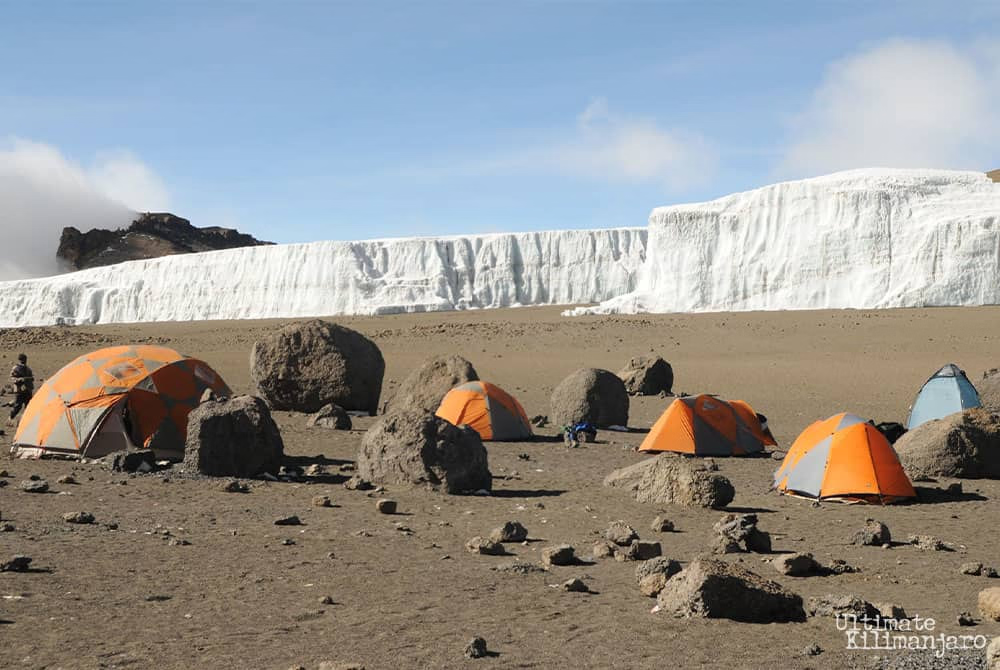
Shira 2 Camp (3,850m) sits in the plateau's heart with spectacular sunset views of Kibo's Western Breach and glaciers. This extra acclimatization day is crucial for summit success—allowing your body to adjust gradually reduces altitude sickness and increases strength for summit attempt.
Begin the critical "climb high, sleep low" acclimatization day. Trek east across increasingly barren terrain toward Lava Tower—a 300-foot volcanic plug at 4,600m. The landscape becomes stark and otherworldly in the alpine desert zone.
Reach Lava Tower for lunch—at 4,600m, many trekkers feel altitude effects (headache, breathlessness, fatigue). This is intentional and beneficial! Your body needs exposure to higher altitude before sleeping lower. Some groups climb the tower itself for additional acclimatization.
After lunch, descend into the beautiful Barranco Valley via the spectacular Great Barranco Wall. The descent is dramatic—losing 640m while your body absorbs the altitude training. Watch vegetation return as you drop into the semi-alpine zone.
Barranco Camp (3,960m) nestles beneath towering Barranco Wall you'll climb tomorrow. Despite descending from today's high point, you've gained critical acclimatization. The camp offers spectacular sunset views of the Western Breach and Kibo's southern glaciers glowing orange in evening light.
Conquer the famous Barranco Wall—the day's highlight and memorable challenge. This 257-meter rock face looks intimidating but is achievable with careful footwork. No technical climbing needed, though some sections require hands for balance and support.
Scramble up the wall taking 1-2 hours, with spectacular views of Kilimanjaro's glaciers and the plains far below. At the top, celebrate with fellow trekkers—the Barranco Wall is a highlight many remember fondly.
Continue the southern circuit across several ridges and valleys through barren alpine landscape. The trail undulates significantly, testing legs but rewarding with constantly changing summit perspectives. Each ridge reveals new angles of Kibo's massive bulk.
Karanga Camp (4,000m) strategically positioned for continued acclimatization. This relatively short day allows rest before pushing to high camp tomorrow. The campsite provides water and spectacular views—your last reliable water source before summit attempt.
Trek to Barafu Camp ("ice" in Swahili)—your base for tonight's summit attempt. The trail continues through increasingly barren alpine desert where only lichens survive the harsh conditions above 4,000 meters.
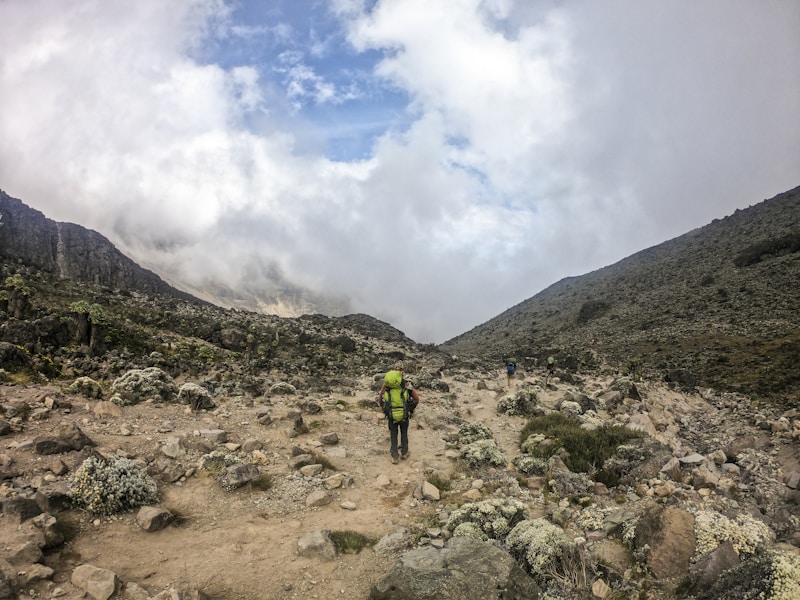
Climb steadily through volcanic scree and rock. Move slowly (pole pole), breathe deeply, stay hydrated. The altitude affects everyone now—shortness of breath, reduced appetite, and fatigue are universal at this elevation.
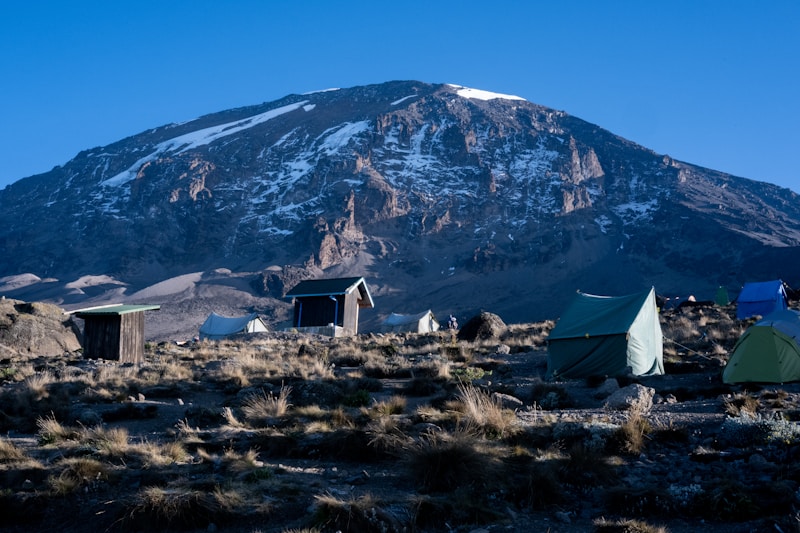
Barafu Camp (4,640m) perches on an exposed ridge with dramatic drop-offs and spectacular but harsh conditions. Cold, windy, and completely devoid of vegetation—this is true high-altitude mountaineering terrain.
Arrive early afternoon to rest before tonight's midnight summit departure. Organize summit gear, force food and fluids, try to sleep. Most find sleep impossible due to altitude, excitement, and anxiety—completely normal. Your guides wake you around 11pm.
Summit night begins around midnight under brilliant stars. This is your most challenging day—physically exhausting, mentally demanding, emotionally powerful. Climb slowly in single file using headlamps, ascending through volcanic scree that slides frustratingly underfoot.
Progress feels agonizingly slow through the darkness. Temperatures drop to -20°C or colder, and altitude makes every step difficult. Mental strength is crucial—keep moving forward, stay warm, focus on your goal. This is where your week of acclimatization pays dividends.
Reach Stella Point (5,739m) on the crater rim at sunrise—a magical moment witnessing dawn from above Africa. The sun illuminates glaciers and casts long shadows. From Stella, traverse the crater rim 1-2 hours to Uhuru Peak (5,895m)—Africa's highest point!
Stand on the Roof of Africa! Celebrate at the famous summit sign, but don't linger in the thin air. Descend to Barafu for rest and lunch, then continue down to Mweka Camp (3,080m). Today's marathon covers 12-16 hours and 2,800m vertical distance—utterly exhausting but life-changing.
Your final descent through moorland and lush rainforest to Mweka Gate. Despite tired legs, spirits soar—you've conquered Africa's highest peak! The steep descent can be slippery; use trekking poles and watch footing carefully.
Re-enter the magical rainforest where air becomes thick and warm. The jungle canopy provides shade, birds sing, and wildlife returns. Marvel at your complete journey—from pristine western forests through five climate zones to arctic summit and back.
At Mweka Gate (1,640m), sign out and receive your official summit certificate—green for Uhuru Peak, blue for Stella Point. This treasured document commemorates your extraordinary achievement.
Say emotional goodbyes to your mountain crew who made your dream possible. Tipping is customary and deeply appreciated. Transfer to Moshi or Arusha for hot showers, celebration dinners, and well-deserved rest!
All prices are per person. Group discounts available for 4+ climbers.
Price includes: All park fees, camping fees, rescue fees, professional mountain guides, porters, cook, camping equipment, all meals on mountain, drinking water. Excludes: Tips, personal gear, flights, visa, insurance, hotel accommodation.
The 8-day Lemosho offers 90-95% summit success through optimal acclimatization and gradual ascent.
Experience Kilimanjaro's most remote and scenic approach with minimal crowds and unspoiled nature.
Cross the spectacular Shira Plateau with panoramic views and unique high-altitude moorland ecosystem.