
The Machame Route, nicknamed the "Whiskey Route," is one of the most scenic and popular paths to the summit of Mount Kilimanjaro. This challenging route approaches from the southwest, traversing diverse ecological zones from lush rainforest to arctic summit conditions.
Known for its "climb high, sleep low" profile, Machame offers excellent acclimatization and spectacular scenery. The route's diverse landscapes and dramatic terrain make it a favorite among trekkers seeking both adventure and high summit success rates. Prepare for steep ascents, stunning vistas, and the journey of a lifetime to Africa's highest peak at 5,895 meters.
Your Kilimanjaro adventure begins at Machame Gate (1,800m) after registration with park authorities. Meet your experienced mountain crew—guides, porters, and cooks who will support your summit bid.
Trek through dense montane rainforest on well-maintained trails. The forest canopy filters sunlight creating a mystical atmosphere, while colobus monkeys leap through trees and exotic birds call from the canopy. Look for colorful chameleons, butterflies, and unique flora found only on Kilimanjaro's slopes.
The trail steadily climbs through thick vegetation, crossing several streams via wooden bridges. As you gain elevation, notice how the forest transitions from tropical to heath vegetation. The air becomes cooler and thinner—your first hint of the altitude challenge ahead.
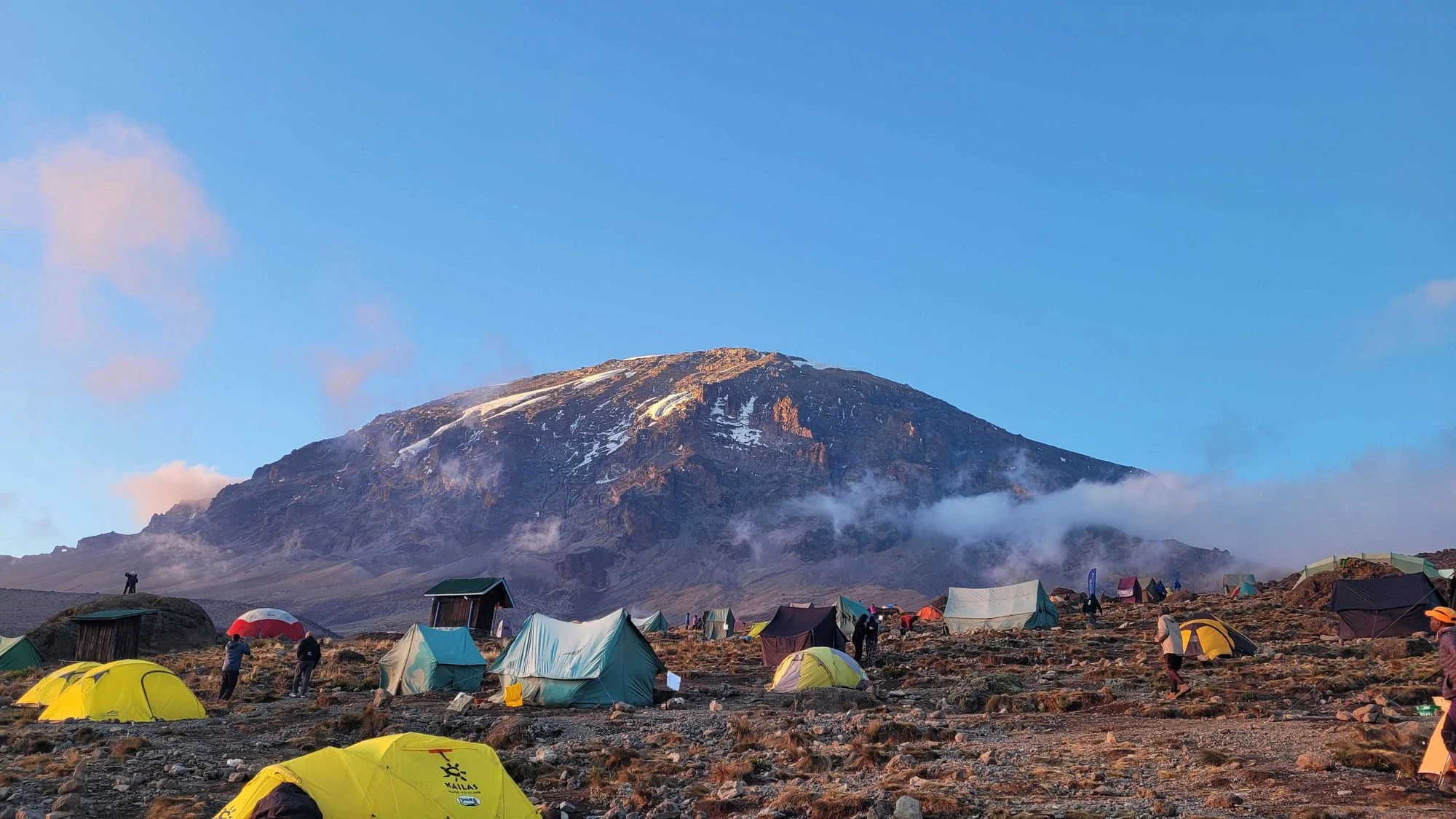
Arrive at Machame Camp (3,000m) positioned at the forest's edge where heather moorland begins. Your crew will have camp set up—tents pitched, water boiled, and dinner prepared. Enjoy your first mountain sunset with views across the valley to your objective: Kilimanjaro's snow-capped summit.
Leave the forest behind as you ascend into the moorland zone. The trail becomes steeper and more exposed, climbing rocky ridges with spectacular views opening in all directions. On clear days, see Mount Meru floating above clouds to the west.
Trek through heath and moorland characterized by giant heathers and otherworldly vegetation. Cross the steep valley descending from Kibo's summit, then ascend a rocky ridge to reach the edge of the expansive Shira Plateau—one of Kilimanjaro's three volcanic cones.
The landscape transforms dramatically throughout the day—from heather thickets to rocky terrain to the vast plateau stretching before you. This varied scenery makes Machame one of the mountain's most visually stunning routes.
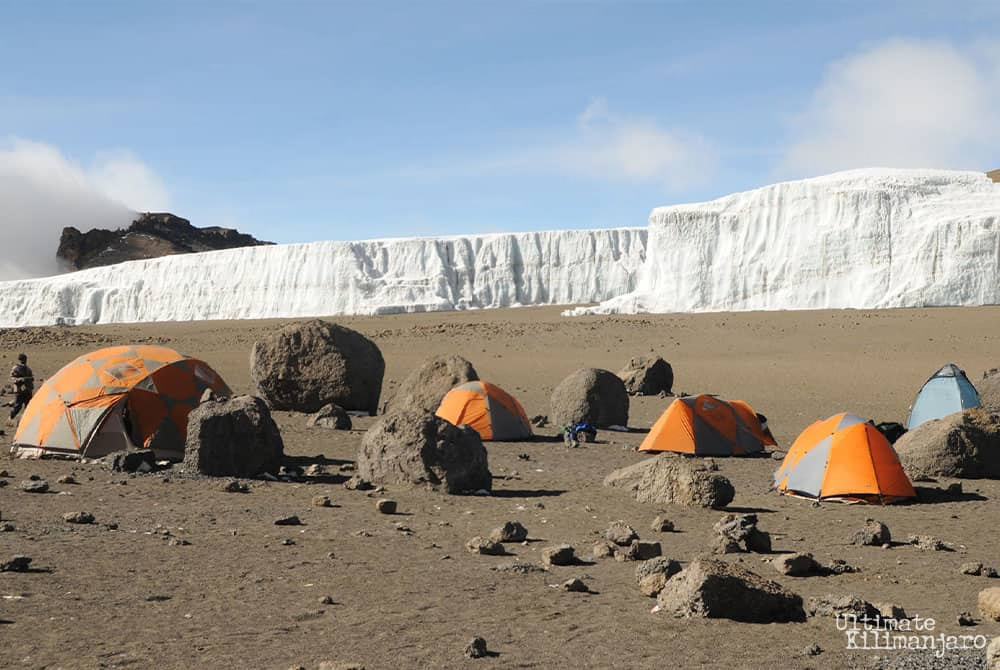
Shira Camp (3,840m) sits on the plateau with panoramic views of Kibo Peak ahead and the Western Breach to your right. You're now fully exposed to the elements—windy, cold, and utterly spectacular. Tonight you'll feel the altitude more noticeably as your body continues acclimatizing.
Today follows the critical "climb high, sleep low" principle for optimal acclimatization. Trek east across the Shira Plateau toward Lava Tower, climbing steadily into the alpine desert zone where vegetation becomes sparse and alien-looking.
Reach Lava Tower (4,600m), a volcanic rock formation where you'll stop for lunch. Many trekkers feel the altitude here—headaches, breathlessness, and fatigue are normal. This temporary discomfort serves a crucial purpose: exposing your body to higher altitude before descending to sleep lower, significantly improving summit success chances.
After lunch, descend dramatically into the beautiful Barranco Valley via the spectacular Great Barranco Wall descent. Watch the landscape transform from barren alpine desert back to semi-alpine zone with the first signs of vegetation returning.
Barranco Camp (3,960m) nestles in a scenic valley beneath the towering Barranco Wall you'll climb tomorrow. The camp offers stunning sunset views of the Western Breach and Kibo's glaciers glowing in evening light. Despite descending from today's high point, you've gained valuable acclimatization altitude.
Begin with an exhilarating climb up the famous Barranco Wall—a 257-meter rock face that looks intimidating but proves manageable with careful footwork. Despite being called a "scramble," no technical climbing skills are needed, though some sections require using hands for balance.
The wall ascent takes 1-2 hours and rewards you with magnificent views of Kilimanjaro's glaciers and Mount Meru in the distance. At the top, celebrate this achievement with your fellow trekkers—the Barranco Wall is a highlight many remember most fondly.
Continue over rocky terrain across several ridges and valleys on the mountain's southern circuit. The trail undulates, ascending and descending through barren alpine landscape, testing your legs but providing constant visual rewards with ever-changing perspectives of the summit.
Arrive at Karanga Camp (4,000m), strategically positioned for continued acclimatization. This relatively short day allows rest before tomorrow's push to high camp. The campsite offers spectacular views and is your last water source before summit night.
Trek to Barafu Camp ("barafu" means "ice" in Swahili), your base for the summit attempt. The trail continues through increasingly barren alpine desert—sparse vegetation, volcanic rock, and thin air characterize this harsh environment above 4,000 meters.
The steady climb to Barafu tests your acclimatization and determination. Move slowly (pole pole—slowly slowly in Swahili), breathe deeply, and stay hydrated. The altitude is now seriously affecting everyone—shortness of breath, reduced appetite, and fatigue are universal.
Barafu Camp (4,640m) perches on a narrow ridge with dramatic drop-offs on either side. The views are spectacular but the conditions are harsh—cold, windy, and utterly devoid of vegetation. This is high-altitude mountaineering terrain.
Arrive early afternoon to rest before tonight's summit bid. Organize gear, force yourself to eat and drink, and try to sleep. Your guides will wake you around 11pm for departure. Most trekkers find sleep impossible due to altitude, excitement, and anxiety—that's completely normal.
Depart Barafu Camp around midnight under brilliant stars. Summit night is the most challenging part of your Kilimanjaro journey—physically exhausting, mentally demanding, and emotionally powerful. Climb slowly in single file, using headlamps to navigate the steep, switchbacking trail.
Ascend through deep volcanic scree that slides frustratingly underfoot. Progress feels agonizingly slow—two steps forward, one slide back. The cold is intense (often -20°C), and altitude makes every step an effort. This is where mental strength matters most—keep moving, stay warm, focus on the goal.
Reach Stella Point (5,739m) on the crater rim at sunrise—one of life's truly magical moments. Watch the sun illuminate Africa from above, casting shadows across the glaciers. From Stella, it's another 1-2 hours traversing the crater rim to Uhuru Peak (5,895m)—the highest point in Africa.
Stand atop Africa! Take photos at the famous summit sign, celebrate your achievement, but don't linger—the thin air is dangerous. Descend back to Barafu Camp for rest and lunch, then continue down to Mweka Camp (3,080m) in the moorland zone. Today is exhausting—you'll trek 12-16 hours and traverse 2,800m vertical distance.
Your final day descends through the lush moorland and rainforest zones back to Mweka Gate. Despite tired legs, spirits are high—you've conquered Africa's highest peak! The descent is steep and can be slippery, so watch your footing and use trekking poles.
Re-enter the rainforest where the air becomes noticeably thicker and warmer. The jungle canopy provides welcome shade, and the sounds of birds and wildlife return. Marvel at how far you've journeyed—from dense forest to arctic summit and back.
At Mweka Gate (1,640m), sign out with park authorities and receive your official summit certificate—a treasured memento of your achievement. Successful summiteers receive green certificates, while those reaching Stella Point receive blue certificates.
Say goodbye to your mountain crew who made your summit possible. Tipping is customary and greatly appreciated by guides, porters, and cooks who worked tirelessly. Transfer back to your Moshi or Arusha hotel for a hot shower, celebratory meal, and well-deserved rest!
All prices are per person. Group discounts available for 4+ climbers.
Price includes: Park fees, camping fees, rescue fees, professional mountain guides, porters, cook, camping equipment, meals on mountain, drinking water. Excludes: Tips, personal gear, flights, visa, insurance, hotel accommodation.
The 7-day Machame route offers excellent acclimatization with 85-90% summit success rate.
Trek through five distinct climate zones from rainforest to arctic summit conditions.
Experience the thrilling scramble up the iconic Barranco Wall with stunning panoramic views.